Beyond Rosogolla: 7 Kolkata Food Experiences Every Food Lover Should Try
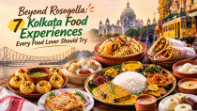
Mention Kolkata to a food lover, and there’s a good chance the conversation will begin with rosogolla. The iconic Bengali sweet has become one of the city’s most recognized culinary symbols, attracting visitors from across India and around the world.
But Kolkata’s food culture is far richer and more diverse than a single dessert.
For centuries, the city has been shaped by Bengali traditions, Mughlai influences, colonial history, Chinese communities, and generations of food entrepreneurs who have contributed to one of India’s most vibrant culinary landscapes. Today, visitors can enjoy everything from traditional Bengali feasts and legendary biryani to bustling street food stalls, historic cafés, and unique cultural food experiences.
For anyone searching for the best restaurants in Kolkata, the city offers far more than just famous sweets. The real magic lies in exploring the variety of flavours, traditions, and food stories that make Kolkata unique.
If you’re planning your next food adventure, here are seven unforgettable Kolkata foods to explore beyond rosogolla.
1. Experience an Authentic Bengali Feast
No food journey through Kolkata is complete without sitting down for a traditional Bengali meal.
Unlike many cuisines that focus on a single signature dish, Bengali dining is about balance, variety, and progression. A traditional meal often includes rice, lentils, vegetables, fish, meat preparations, chutney, and dessert, all served in a particular sequence.
Fish plays a central role in Bengali cuisine. Dishes such as shorshe ilish (hilsa in mustard sauce), chingri malaikari (prawns cooked in coconut gravy), and bhetki paturi (fish wrapped and steamed in banana leaves) showcase the depth of local culinary traditions.
What makes this experience special is the attention given to flavours and textures. Every dish serves a purpose and contributes to the overall meal.
For visitors looking for authentic places to eat in Kolkata, traditional Bengali restaurants provide an excellent introduction to the city’s culinary heritage. A well-prepared Bengali thali offers a complete experience rather than just a single dish.
More importantly, it tells a story about Bengal’s culture, geography, and relationship with food.
2. Discover the City’s Legendary Street Food
Street food is an essential part of Kolkata’s identity.
Across busy neighbourhoods, markets, and roadside corners, food vendors serve snacks that have become part of the city’s everyday life.
One of the most famous examples is the Kolkata kathi roll. Created as a convenient meal that could be eaten on the go, the kathi roll combines flaky paratha bread with fillings such as egg, chicken, mutton, or vegetables.
However, Kolkata’s street food scene extends far beyond rolls.
Phuchka remains one of the city’s most loved snacks. Similar to pani puri but with a distinct Bengali character, phuchka combines crispy shells, spicy mashed potatoes, tamarind water, and bold flavours that make it difficult to stop after just one.
Other popular favourites include telebhaja, aloo chop, ghugni, and Mughlai paratha.
The beauty of Kolkata’s street food culture is its accessibility. Some of the city’s most memorable meals come not from fine dining establishments but from small stalls that have been serving loyal customers for decades.
3. Taste Kolkata’s Unique Style of Biryani
Every major Indian city has its own biryani culture, but Kolkata’s version stands apart.
Its origins can be traced back to the arrival of Nawab Wajid Ali Shah in Kolkata during the nineteenth century. Over time, the rich Awadhi style evolved into something uniquely Bengali.
The result is a biryani known for its fragrant rice, delicate spices, tender meat, and most famously, the inclusion of potatoes.
For many visitors, the potato becomes an unexpected highlight of the dish.
Unlike heavily spiced regional biryanis, Kolkata biryani is often appreciated for its balance and subtle flavours. The emphasis is on harmony rather than intensity.
Today, some of the city’s most respected biryani establishments continue to attract long queues of loyal customers. Whether enjoyed at a historic restaurant or a modern dining venue, Kolkata biryani remains one of the most important Kolkata foods to explore.
4. Start Your Morning at Tiretta Bazaar
One of Kolkata’s most unique food experiences happens before most people have finished breakfast.
Located in the city’s historic Chinatown, Tiretta Bazaar offers an early-morning food market that reflects Kolkata’s Chinese heritage.
Chinese communities have been part of Kolkata for generations, contributing significantly to the city’s cultural and culinary identity. Their influence helped shape the Indian-Chinese cuisine that later became popular throughout the country.
At Tiretta Bazaar, visitors can enjoy freshly prepared dumplings, bao, meatball soup, and other traditional Chinese breakfast items.
What makes this experience memorable is the atmosphere.
As the city slowly wakes up, food lovers gather around small stalls to enjoy dishes rarely found elsewhere in India. The combination of history, culture, and food creates an experience that feels entirely different from a typical restaurant visit.
For anyone interested in exploring Kolkata beyond the obvious tourist attractions, Tiretta Bazaar is a must-visit destination.
5. Experience Kolkata’s Historic Café Culture
Food in Kolkata is closely connected to conversation.
The city has a long tradition of intellectual gatherings where writers, artists, students, and thinkers meet over tea, coffee, and snacks.
Nowhere is this culture more visible than at the historic Indian Coffee House near College Street.
For decades, the café has served as a meeting place for some of Bengal’s most influential minds. The food is simple, but the atmosphere is unforgettable.
Visitors often spend hours discussing literature, politics, art, and everyday life while enjoying coffee and traditional snacks.
Another iconic destination is Park Street’s famous café culture. Historic establishments such as Flurys continue to attract visitors with their old-world charm, pastries, and classic European influences.
These cafés demonstrate that some of the best places to eat in Kolkata are not necessarily about elaborate menus. Sometimes, the experience itself becomes the highlight.
6. Explore Bengal’s Seafood Traditions
Bengal’s relationship with seafood is deeply rooted in its geography.
With rivers, wetlands, and coastal influences shaping local diets for centuries, fish has become one of the defining features of Bengali cuisine.
While many visitors try fish curry during their stay, there is much more to discover.
Hilsa remains one of Bengal’s most celebrated fish varieties and is prepared in numerous ways. Prawns are equally important, appearing in rich coconut-based curries as well as lighter traditional dishes.
Bhetki is another local favourite and is often prepared as paturi, fry, or cutlets.
The diversity of preparations highlights the creativity of Bengali cooking. The same ingredient can produce completely different flavours depending on the cooking method and accompanying spices.
For visitors seeking memorable restaurants in Kolkata, seafood-focused Bengali restaurants provide an excellent opportunity to explore these traditions in greater depth.
7. Go Beyond Rosogolla and Explore Kolkata’s Sweet Heritage
Rosogolla may be the city’s most famous sweet, but it is only one chapter in a much larger story.
Kolkata’s sweet shops offer an astonishing variety of traditional Bengali desserts.
Sandesh is perhaps the most versatile, available in countless forms ranging from simple and delicate to highly artistic creations. Mishti doi remains a favourite among locals and visitors alike, while sweets such as chomchom, kachagolla, and jolbhora continue to showcase the creativity of Bengali confectioners.
Many of the city’s famous sweet shops have histories spanning more than a century, preserving recipes and techniques passed down through generations.
Seasonal sweets also play an important role in Kolkata’s food culture. During winter, desserts made with nolen gur, a fragrant date palm jaggery, become especially popular.
Exploring Kolkata’s sweet heritage offers a fascinating glimpse into the traditions that have shaped Bengali celebrations, festivals, and family gatherings for generations.
Why Kolkata’s Food Culture Is Unlike Anywhere Else
What makes Kolkata special is not just the quality of its food but the diversity of experiences it offers.
Few cities allow visitors to enjoy a traditional Bengali feast for lunch, a historic café in the afternoon, street food in the evening, and a Chinese breakfast the following morning.
Each experience reveals a different layer of the city’s history.
The food reflects migration, trade, colonial influence, local traditions, and cultural exchange. It tells stories about the communities that built Kolkata and continue to shape it today.
This is why searching for places to eat in Kolkata often leads to much more than restaurant recommendations.
It becomes an exploration of the city’s identity itself.
Final Thoughts
Kolkata’s culinary reputation may begin with rosogolla, but it certainly doesn’t end there.
From traditional Bengali meals and legendary street food to historic cafés, biryani, seafood, and Chinese breakfast markets, the city offers a remarkable range of food experiences that reflect its rich cultural heritage.
For food lovers, the best way to explore Kolkata is not by focusing on a single dish but by embracing the variety that makes the city unique.
The next time you’re looking for restaurants in Kolkata or researching Kolkata foods to explore, go beyond the famous sweets.
Try the experiences that locals cherish, discover the flavours that have shaped the city for generations, and allow Kolkata to tell its story through food.
Because in Kolkata, every meal is more than just something to eat—it’s a connection to history, culture, and community.